

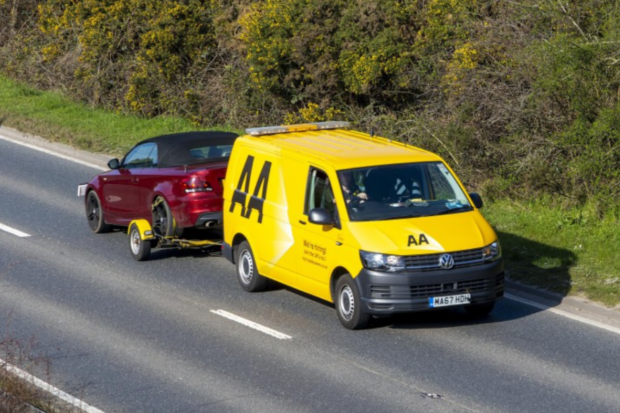
When your car stops on the hard shoulder, refuses to start outside the house, or breaks down late at night on a rural road, the question is not just who can help. It is who can help in the way you actually need. Many Irish motorists compare AA breakdown assistance with independent local breakdown assistance because the two options can feel similar at first glance: both promise help when a vehicle lets you down. In practice, they can work very differently.
AA breakdown assistance is usually associated with membership-style cover, different levels of protection, nationwide support and a recognised brand. Local breakdown assistance is usually more direct: you contact a nearby recovery operator, explain the problem and arrange roadside help, towing or vehicle recovery on the spot. Neither option is automatically better for every driver. The right choice depends on how far you travel, the age of your vehicle, your tolerance for paying a subscription, the kind of breakdown you are most worried about and how quickly you need practical help.
This guide compares the main points Irish drivers should check before choosing between AA breakdown assistance and a local recovery provider. It covers cover types, callout models, towing limits, response expectations, common exclusions, typical scenarios and the moments when a local towing service may be faster or more practical.
The quick answer: what is the main difference?
The simplest difference is that AA breakdown assistance is generally a pre-arranged breakdown cover product, while local breakdown assistance is often a direct service you call when you need it. With membership cover, you may pay annually or monthly for access to assistance under defined terms. With a local recovery company, you typically pay for the job required, such as a callout, jump start, roadside repair attempt, tow to a garage or recovery from a roadside location.
That difference matters because breakdowns are rarely identical. One driver may want the reassurance of a national network because they regularly travel from Cork to Dublin. Another may only need a fast tow from a local road to a trusted garage ten kilometres away. A family with two older cars might want continuous cover, while someone with a rarely used second car may prefer to pay only when a problem happens. If you are unsure whether the situation calls for repair at the roadside or immediate transport, our guide to roadside assistance vs towing service explains the practical difference.
AA breakdown assistance in Ireland: what drivers are usually buying
Large breakdown assistance providers usually offer cover in levels. The exact names and terms can change, so motorists should always read the current policy documents before buying, renewing or relying on a benefit. However, the structure is usually familiar: a basic level for roadside help, optional home start, broader recovery options, onward travel and sometimes personal cover rather than cover attached only to one registered vehicle.
The appeal is predictability. You know you have a number to call, you know the service is intended for breakdown situations and you may have access to support even when you are outside your home county. This can be reassuring for drivers who travel long distances, commute on motorways, drive at night or do not have a local garage relationship. For some drivers, the annual fee is worth it for peace of mind even if they rarely call for help.
The trade-off is that cover is controlled by terms. There may be conditions around how soon after purchase you can use the policy, whether the vehicle was roadworthy before the journey began, what counts as a breakdown, how many callouts are included, how far the vehicle can be towed and whether help at your home address is included. A membership product is not the same as unlimited recovery in every situation.
Local breakdown assistance: how independent recovery usually works
A local breakdown assistance provider is usually a towing or recovery operator serving a defined area. Instead of checking a membership policy first, the operator focuses on the immediate job: where is the vehicle, what has happened, is it safe, can it be fixed roadside, and where does it need to go if towing is required? This can make the process very practical, particularly when you already know the destination garage or need a vehicle moved quickly.
Local services are often used for flat batteries, punctures, wrong-fuel situations, clutch or gearbox failure, accident recovery, non-starting vehicles, vehicles stuck at home, and cars that need to be transported to a garage, driveway or dealer. Many local operators also provide after-hours support. If you need urgent support at night, a dedicated 24-hour towing service in Ireland may be more relevant than waiting to check whether a membership benefit applies.
The benefit of local help is directness. You can often describe the vehicle, the location, the road conditions and the destination to the same person arranging the truck. A nearby operator may already know the junction, industrial estate, retail park, rural road or garage you are talking about. The limitation is that you are usually paying for that specific job, so the price should be confirmed before the truck is dispatched where possible.
Comparison table: AA cover vs local recovery provider
| Point to compare | AA breakdown assistance style cover | Independent local breakdown assistance |
|---|---|---|
| Payment model | Usually membership, subscription or annual cover with defined benefits. | Usually pay per callout, tow or recovery job. |
| Best for | Drivers wanting ongoing reassurance, especially for regular long-distance travel. | Drivers needing immediate practical help in a known area or a tow to a chosen garage. |
| Cover area | Often designed for wider or national use, subject to policy terms. | Strongest in the operator’s local service area, with possible longer-distance towing by quote. |
| Towing | May be limited by cover level, mileage, nearest repairer rules or policy wording. | Usually arranged based on where the vehicle is and where you want it brought. |
| Response time | Depends on network availability, demand, location and prioritisation. | Depends on how close the truck is, traffic, weather and current workload. |
| Exclusions | Set out in membership terms and may include repeat faults or non-covered incidents. | Set by the provider and job type; some jobs may need specialist equipment. |
Cover types: what level of help do you actually need?
Before comparing prices, compare the type of help you expect to need. Breakdown assistance can mean several different things, and misunderstanding the difference is one of the most common reasons drivers feel disappointed during an emergency.
Roadside assistance
Roadside assistance usually means an attempt to get the vehicle moving again where it has broken down. This might include a jump start, minor temporary fix, wheel change or basic diagnosis. It is useful when the fault is simple and the vehicle can safely continue afterwards. However, roadside assistance does not guarantee a permanent repair. If the alternator has failed, the clutch has gone, the timing belt has snapped or a warning light indicates a serious fault, the safer answer may be towing.
Home start or home assistance
Many breakdowns happen before a journey begins. A car may not start on a cold morning, a battery may be flat after the lights were left on, or an older vehicle may refuse to turn over after several days parked. Membership-style products may treat breakdowns at home differently from breakdowns away from home, so check whether home start is included. A local recovery provider can usually attend a driveway, apartment car park or workplace car park, but access and parking restrictions should be mentioned when calling.
If the only issue is a weak or failed battery and the vehicle is safely parked, a specialist mobile battery replacement service may also be worth considering. If the fault is uncertain or the vehicle needs to be moved, a recovery operator may be more suitable.
Vehicle recovery and towing
Recovery means the vehicle cannot or should not continue and needs to be transported. This is where local towing services can be especially practical. You can request a tow to your regular mechanic, a main dealer, your home, a tyre centre or another safe destination. With membership cover, the destination may depend on the level of cover and the provider’s rules. Some policies prioritise towing to the nearest suitable garage, while higher levels may allow longer-distance recovery.
Onward travel
Onward travel benefits may help you continue your journey if the vehicle cannot be repaired quickly. Depending on the policy, this might involve a replacement vehicle, accommodation contribution or transport support. This can be valuable if you break down far from home with passengers, luggage or work commitments. Local recovery providers may not offer this as a formal benefit, but they may still help by bringing the vehicle to a location where you can arrange a lift, taxi, rental car or garage assessment.
Callout models: subscription cover vs pay-as-you-go recovery
The callout model is one of the clearest differences. With AA-style cover, you pay before the problem happens. The advantage is that a covered callout may not require a separate full recovery payment at the roadside, provided the incident fits the terms. The disadvantage is that you may pay for years without using it, or discover that a particular incident is outside the cover level you bought.
With local recovery, you usually pay when you need help. This suits drivers who prefer not to carry a subscription, motorists with a trusted local garage, or people who need a specific tow rather than a general breakdown response. The drawback is that you should expect a callout or towing charge, especially outside normal hours, in bad weather, on motorways, or where a vehicle requires specialist handling.
A practical way to compare is to ask yourself: if my car broke down three times in a year, would I prefer pre-paid cover or direct job pricing? If my car did not break down at all, would I still be happy paying for reassurance? There is no universal answer. Your driving pattern matters more than the brand name.
Towing limits: read the detail before you rely on cover
Towing limits can make a major difference during a breakdown. A policy may include recovery, but only to the nearest suitable repairer, only within a defined distance, or only under a certain cover level. Some drivers assume that any breakdown policy means the car can be transported to any garage in Ireland. That is not always the case. Always check the wording for mileage limits, destination rules, vehicle weight limits and whether additional costs may apply.
Local recovery is usually clearer at the point of booking because you can ask for the exact journey: for example, from a supermarket car park in Cork to your mechanic in Mallow, or from a motorway service area to a dealer in Limerick. The provider can then quote based on distance, time, access and vehicle condition. If the car is damaged, locked, stuck in gear, has no steering, or cannot roll, say so early because the truck and equipment may need to be different.
For older or higher-mileage vehicles, towing limits are especially important. A roadside fix may get you moving temporarily, but if the same fault returns, you may need proper transport to a workshop. Drivers with older cars should also read our guide to breakdown assistance for used cars and older vehicles, because age, maintenance history and recurring faults all affect the best recovery plan.
Response expectations: who is likely to arrive faster?
It is tempting to ask whether AA breakdown assistance or a local provider is faster, but the honest answer is: it depends on location, demand and the type of incident. A national provider may have access to a network of patrols and contractors. That can be useful across a wide area. However, during peak times, storms, icy mornings, bank holidays or motorway incidents, demand can rise sharply. The nearest available unit may not be as close as you expect.
A local recovery operator may be faster when the truck is already nearby, when the driver knows the area, or when you need a straightforward tow rather than a membership assessment. Local knowledge can matter in Ireland, particularly on rural roads, business parks, housing estates, ferry routes, tourist areas and places where Eircodes, landmarks and access points are more useful than street names alone.
When calling any provider, give precise information: road name, direction of travel, nearest junction, Eircode if available, visible landmarks, vehicle make and model, number of passengers, whether children or vulnerable passengers are present, and whether the vehicle is in a dangerous position. The quality of the information you provide can reduce delays and help the right equipment arrive first time.
Motorway breakdowns: comparison becomes safety-critical
Motorway breakdowns are different from driveway or town breakdowns because the risk is higher. Fast-moving traffic, narrow hard shoulders, poor visibility and stress can all make decision-making harder. In this situation, the first priority is safety, not price comparison. Move to a safe place if possible, use hazard lights, exit the vehicle from the passenger side when safe, stand behind the barrier and call for help. If there is danger or obstruction, contact emergency services as appropriate.
Once people are safe, the comparison between national cover and local recovery becomes practical. If your membership provider can dispatch quickly and the incident is covered, that may be suitable. If you need immediate removal from a dangerous location or you already know a nearby recovery operator, a local towing service may be the faster route. For more detail on this specific situation, see our motorway breakdown assistance in Ireland guide.
Exclusions and small print to check carefully
Breakdown assistance is only useful if it applies to the incident you are facing. Before choosing AA breakdown assistance, local cover or any other provider, check the exclusions. Common conditions may relate to vehicle roadworthiness, tax and insurance, repeated callouts for the same unresolved fault, pre-existing problems, vehicle size and weight, commercial use, trailers, caravans, accidents, keys locked in the vehicle, misfuelling, punctures where no spare is available, and use outside the covered territory.
Local providers have practical limitations too. Not every truck can recover every vehicle. A lowered sports car, automatic stuck in park, damaged suspension, underground car park recovery, loaded van or vehicle off the road may need specialist equipment. The key is to describe the situation honestly. If the vehicle cannot roll, has accident damage, is in a tight lane or is carrying heavy goods, mention it before the operator arrives.
Also check what happens after the first callout. If a patrol jump-starts the car and advises battery replacement, but the driver ignores the advice and breaks down again the next morning, a membership provider may treat the repeat incident differently. A local provider can attend again, but it will usually be another chargeable job. Understanding the cause of the breakdown helps avoid repeat costs. Our article on common car breakdown causes in Ireland covers the faults Irish drivers see most often, including batteries, tyres, overheating and electrical issues.
Practical examples for Irish motorists
Example 1: the commuter with a flat battery at home
If your car will not start in the driveway at 7 am, the best option depends on your cover. If home start is included, membership assistance may be convenient. If it is not included, you may face an upgrade or separate fee. A local operator can often attend directly, jump-start the vehicle or tow it to a garage if the battery, alternator or starter motor needs attention. If the battery is old, replacing it may be better than repeatedly jump-starting it.
Example 2: the family car breaks down far from home
If you are two counties away with children, luggage and no easy lift, broader membership cover with onward travel may be valuable. It may help with transport or recovery beyond the nearest garage, depending on the terms. A local recovery provider can still tow the vehicle, but passenger transport and onward travel may need separate arrangements. In this example, the value of national breakdown cover is not only the tow; it is the journey support around it.
Example 3: the car needs to go to a specific mechanic
If your priority is getting the car to your own mechanic, a local towing service may be the simpler choice. You can give the exact pickup point and drop-off destination, confirm the price and arrange timing. Membership cover may or may not bring the vehicle to that garage depending on your level of cover, distance and repairer rules. This is a common reason drivers choose local recovery even if they have some form of breakdown cover.
Example 4: the vehicle is unsafe after a minor incident
After a kerb strike, pothole impact or minor collision, the vehicle may start but still be unsafe to drive. Steering, suspension, tyres and wheels can be damaged in ways that are not obvious. In this situation, do not focus only on whether the engine runs. A local recovery truck may be the safest option, especially if the vehicle needs to be transported for inspection rather than driven on public roads.
When a local towing service may be faster or more practical
A local towing service may be the more practical choice when you need a vehicle moved rather than assessed, when you know the destination, when the vehicle is in a familiar area, or when the situation falls outside a membership benefit. It can also be helpful when the car is parked at home, in a workplace, at a hotel, in a retail car park, at a ferry port, at a garage that cannot repair it, or anywhere access details matter.
- You want the car brought to a specific garage or home address.
- You need help outside normal garage hours.
- The vehicle is older, unreliable or has a recurring fault.
- The breakdown is local and a nearby truck can attend quickly.
- The vehicle is damaged, stuck, non-rolling or unsafe to drive.
- You do not have active breakdown membership or your cover level is unclear.
In these cases, the direct conversation with a recovery operator can save time. You are not trying to interpret a policy at the roadside; you are arranging a solution.
When AA-style breakdown cover may make more sense
Membership-style cover can make sense for motorists who drive long distances, travel across Ireland for work, regularly use motorways, have one car the household depends on, or want the reassurance of calling one number regardless of county. It can also suit drivers who value onward travel options or prefer spreading the cost of breakdown risk across the year.
The key is to buy the right level, not just the cheapest level. If you park on-street and worry about non-starts at home, check home assistance. If you regularly travel far from home, check national recovery and onward travel. If several people drive different cars, compare personal cover with vehicle-specific cover. If your car is older, check whether age, condition or repeated faults affect eligibility.
A simple checklist before you decide
- Do you mainly drive locally, regionally or nationwide?
- Do you want ongoing cover or are you comfortable paying per callout?
- Is home start included, or only roadside help away from home?
- Where can the vehicle be towed, and is there a mileage limit?
- Are onward travel, replacement car or accommodation benefits important?
- How old is your vehicle, and has it had repeated faults?
- Do you need support for one vehicle, multiple vehicles or you as a person?
- Are there exclusions for trailers, commercial use, vehicle weight or accident damage?
- Can you contact a local provider quickly if membership cover does not apply?
It is also worth saving important numbers before you need them. Store your membership number if you have one, the phone number of a trusted local recovery provider, your insurance assistance line, your regular garage and an emergency contact. If you break down, follow safety steps first. Our guide on what to do when your car breaks down in Ireland explains the immediate roadside actions every driver should know.
Conclusion: compare the real-world outcome, not just the brand
AA breakdown assistance and local breakdown assistance both have a place for Irish motorists. The best choice depends on the outcome you want during a stressful moment. If you value year-round reassurance, travel widely and want structured benefits such as onward travel, a national membership-style product may be a good fit. If you need direct, practical vehicle recovery, a tow to a chosen garage or fast local help from someone who knows the area, an independent recovery provider may be the better option.
Do not compare only the headline price. Compare what happens at 10 pm in the rain when the car will not move. Ask who will attend, how quickly they can get there, what they can do at the roadside, where they can tow the vehicle, what is excluded and what it will cost if the incident is not covered. That is the comparison that matters.
For many drivers, the most sensible approach is to understand both options: keep suitable breakdown cover if it matches your driving life, and also know a reliable local recovery service for situations where direct towing is faster, clearer or more practical.