In a storm, the safe decision is usually the boring one: slow down, avoid standing water, and if the car stops or hits something, get yourself somewhere safe before you worry about the vehicle. If anyone is hurt or you are exposed to traffic, ring 999 first. For the car itself, ring Recovery CC on 087 116 1102 and we will tell you what we can do and what it will cost before we set off.
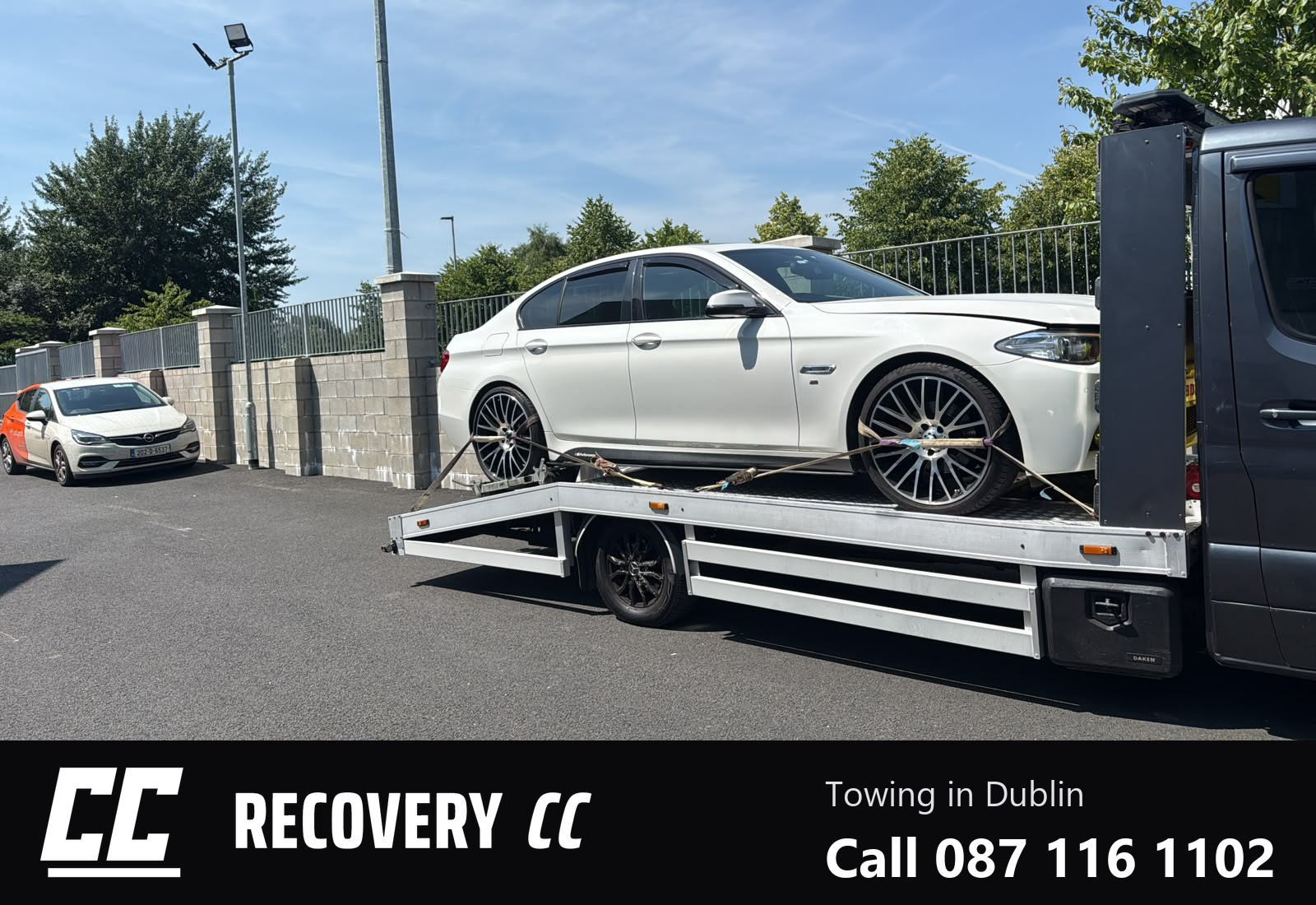
Dublin gets a handful of named storms most winters, and plenty of unnamed wet, windy nights in between. The problems they cause are predictable: branches on the road, water in the dips, gusts on the open stretches, and other drivers who did not slow down. Here is how to think about each.
Before you leave: is the trip worth it?
Check the weather warning level for Dublin before you get in the car. If the advice is to avoid unnecessary journeys, take it at face value.
If you do go:
- Fill up or charge up. Diversions are long and slow in bad weather.
- Put a coat, a torch and a phone charger in the car.
- Tell someone your route. Not dramatic, just useful.
- Check the wipers actually clear the screen. Streaky wipers in sideways rain are a real problem.
Wind: where it catches you
Gusts hit hardest on the exposed parts of the network: the open stretches of the M50, the M1 heading north out of the city, bridges, and anywhere you come out from behind a line of trees or buildings into a gap. Vans, cars with roof boxes and anything towing a trailer feel it most.
- Both hands on the wheel through gaps and over bridges.
- Leave more room beside high-sided vehicles. They move sideways in gusts, and so do you when you pass out of their shelter.
- Watch for debris: bins, branches, bits of fencing. On a dark road, a branch looks like a shadow until you are on it.
If you hit something and the car is damaged but driveable, pull off the main road before you inspect it. If it is not driveable, hazards on, get out on the side away from traffic and get behind a barrier or well off the carriageway. Then ring us. Our accident recovery service covers cars damaged by debris or in storm-related bumps, not only collisions between vehicles.
Water: the rule is simple
Do not drive into water you cannot see the bottom of. That is the whole rule.
The usual trouble spots are dips under railway bridges, low points on estate roads near streams, and the outside lane of dual carriageways where the drains are blocked by leaves. Water that looks like a shallow puddle can be deep enough to reach the engine’s air intake, and once water is drawn into an engine the damage is expensive and immediate.
If you have already driven in and the engine has stopped:
- Do not try to restart it. Turning the engine over with water inside can make a bad situation worse.
- Get out if the water is still and shallow enough to walk through safely. If it is moving or rising, stay put and ring 999.
- Ring us once you are safe. A car that has stalled in water is a recovery job, not a jump start. We will lift it and take it to a garage that can assess it.
Tell us on the call that the car has been in water. It changes how we recover it and where we recommend it goes.
Trees and branches
A tree or large branch down across a road is a job for the council or the emergency services first. Do not try to drive around it on the verge or the footpath. If one has come down on your car:
- Get out if you can do so safely and move well away. Power lines sometimes come down with trees, and you cannot always see them in the dark.
- Ring 999 if there is any sign of cables, if anyone is trapped, or if the road is blocked on a busy route.
- Once the scene is safe, ring us. We recover cars with roof and bonnet damage and bring them to a garage or to your home, whichever you prefer.
Take photos of the car and the tree before it is moved if you can do so without putting yourself at risk. You will want them for the insurer.
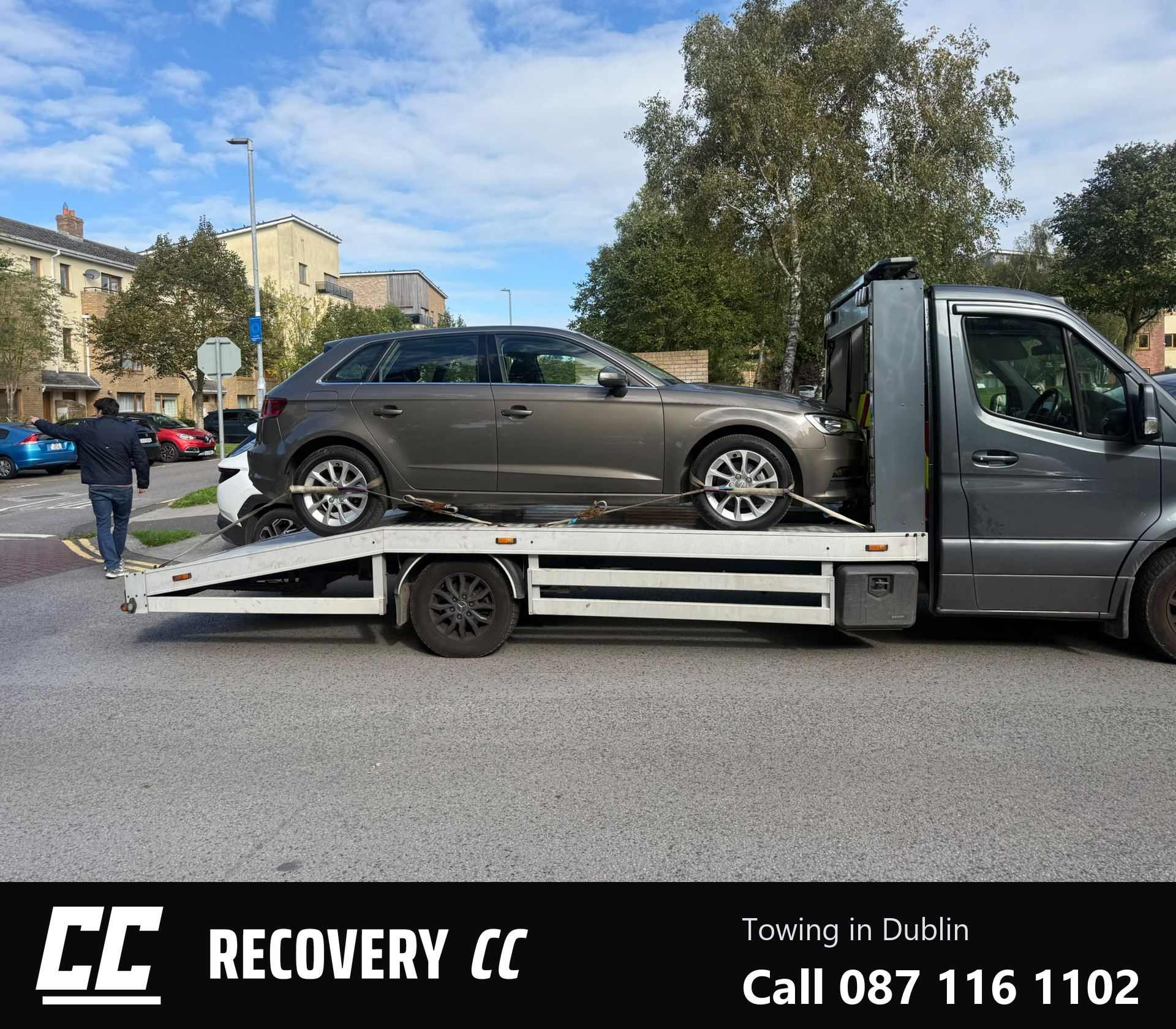
Breakdowns in the storm that have nothing to do with the storm
Batteries fail, belts snap and fuel pumps die in any weather. In a storm they just feel worse. If the car stops on a normal road:
- Hazards on, pull in as far as you can.
- Get out on the kerb side if there is traffic, and stand back from the car.
- Ring us with the road name, a landmark and what the car did.
If you break down on a motorway in a storm, the same advice applies as on any day: get everyone out and behind the barrier on the far side of the hard shoulder, well away from the car, and check the current guidance on where to stand. Wind and rain make the hard shoulder more dangerous, not less, because other drivers see less and react later.
Our breakdown recovery page explains how a standard recovery works.
What recovery can and cannot do in a storm
An honest note. In a severe storm, roads close, trucks are diverted, and some jobs cannot be reached safely until the wind drops. If that is the case when you ring, we will say so plainly rather than promise a time we cannot keep. We will tell you what we can do now, what has to wait, and what you should do in the meantime.
Price is the same as any other day: towing starts from €150, plus €2 per km, agreed with you before a truck moves. Card over the phone, a pay-by-card link by text, or cash.
After the storm
- If the car sat in water, do not start it. Get it assessed first.
- If something hit the bonnet, check it still latches properly before you drive.
- Clear the leaves from the scuttle under the windscreen. Blocked drains there mean water in the cabin and dead electrics weeks later.
FAQ
Will you come out during a red warning?
Ring us and we will tell you honestly what we can reach safely at that moment. If the roads are closed or the wind is too strong for safe recovery, we will say so and tell you what to do until it eases.
My car stalled in a flooded road. Can you jump start it?
No. A car that has taken in water needs to be lifted and assessed by a garage. Trying to start it could cause more damage.
A branch dented my roof. Is that an accident recovery?
We treat it the same way: we recover the car, bring it where you choose and give you a receipt for the insurer. Take photos before the car is moved.
Do you charge more in bad weather?
Our towing price is from €150 plus €2 per km. We tell you the figure on the call before anyone moves.
Ring Recovery CC
If the storm has stopped your car, get yourself safe first, then ring 087 116 1102. Tell us where you are, what happened and whether the car has been in water. You can also use the contact page.